
Nuclear Physics
This track focuses on Nuclear Physics, addressing nuclear structure, collective phenomena, and reaction mechanisms in strongly interacting many-body systems. Topics include ab-initio calculations, chiral effective field theories, nucleon–nucleon correlations, tensor forces, and emergent behavior in medium-mass and heavy isotopes, all central to modern Nuclear Physics research. Studies on drip-line nuclei, shape coexistence, giant resonances, and fission pathways highlight fundamental Nuclear Physics questions. Contributions on nuclear astrophysics—r-process nucleosynthesis, neutron-capture chains, equation-of-state constraints, and neutron-star merger signatures—provide a bridge between nuclear physics and astrophysical phenomena. Experimental investigations using rare-isotope beams, gamma-ray tracking arrays, recoil spectrometers, and high-resolution mass measurements deliver critical Nuclear Physics insights. Heavy-ion collision experiments exploring quark–hadron transitions, symmetry-energy dependence, and transport coefficients expand our understanding of strongly interacting nuclear matter. Detector innovations, accelerator upgrades, and HPC-based simulation methods are advancing the field of Nuclear Physics and our comprehension of nuclear many-body dynamics.

Ephraim Suhir
Portland State University, United States
Alexander Unzicker
Pestalozzi Gymnasium Munchen, Germany
Paulo Cesar De Morais
University of Brasilia, Brazil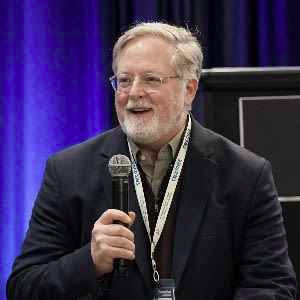
Thomas J Webster
Brown University, United States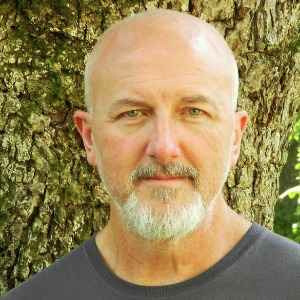
Jon H Brasher
Stelleo Scientific Foundation, United States
Tom Lawrence
Ronin Institute of Independent Scholarship 2.0, United Kingdom
Wenjie Liu
University of Oxford, United KingdomSubmit your abstract Today


Title : Photoaligned azodye nanolayers: New trends for liquid crystal devices
Vladimir Chigrinov, Hong Kong University of Science and Technology, Hong Kong
Title : Where is modern physics heading? Why constants of nature matter
Alexander Unzicker, Pestalozzi Gymnasium Munchen, Germany
Title : Global photochemical model CHARM-DE of the earth’s atmosphere for altitudes 0-130 km
Alexei Krivolutsky, Central Aerological Observatory (CAO), Russian Federation
Title : Nonlinear plasma wave excitation in cylindrical semiconductor waveguides
Amir Sohail, COMSATS University Islamabad, Pakistan
Title : Characterization of quaternary alloy
Yarub Al Douri, European Academy of Sciences, Belgium
Title : Using physics to eliminate implant infection in over 25000 patients to date
Thomas J Webster, Brown University, United States