
Particle & High-Energy Physics
This Particle & High-Energy Physics session focuses on fundamental constituents and interactions using collider, fixed-target, and neutrino-based facilities. Topics include precision Standard Model (SM) tests, electroweak symmetry breaking mechanisms, multi-loop QCD calculations, rare-process amplitudes, and global fits for CKM/PMNS parameters. Emphasis is placed on beyond-SM searches, including supersymmetric signatures, heavy vector bosons, leptoquarks, extra-dimensional excitations, axion-like particles, and dark-sector mediators. Contributions discussing parton distribution evolution, jet substructure techniques, heavy-flavor dynamics, and anomaly-driven processes are included. Detector developments—such as radiation-tolerant silicon trackers, high-granularity calorimetry, fast-timing layers, and ML-enabled triggering—form a major component. Results from LHC, HL-LHC upgrade studies, Belle II, NA62, DUNE, JUNO, IceCube, and cosmic-ray observatories will be highlighted, along with theoretical frameworks constraining high-energy phenomena.

Ephraim Suhir
Portland State University, United States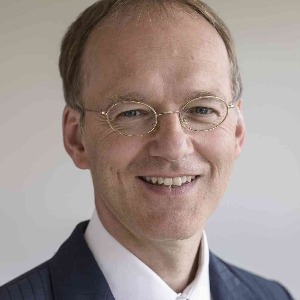
Alexander Unzicker
Pestalozzi Gymnasium Munchen, Germany
Paulo Cesar De Morais
University of Brasilia, Brazil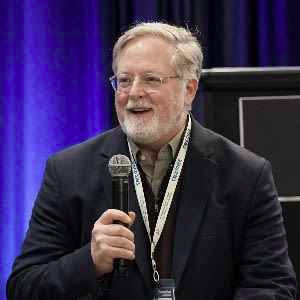
Thomas J Webster
Brown University, United States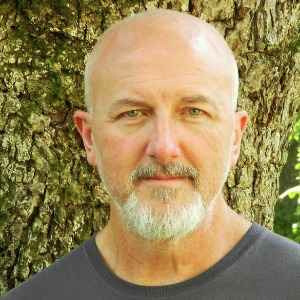
Jon H Brasher
Stelleo Scientific Foundation, United States
Tom Lawrence
Ronin Institute of Independent Scholarship 2.0, United Kingdom
Wenjie Liu
University of Oxford, United KingdomSubmit your abstract Today


Title : Photoaligned azodye nanolayers: New trends for liquid crystal devices
Vladimir Chigrinov, Hong Kong University of Science and Technology, Hong Kong
Title : Where is modern physics heading? Why constants of nature matter
Alexander Unzicker, Pestalozzi Gymnasium Munchen, Germany
Title : Global photochemical model CHARM-DE of the earth’s atmosphere for altitudes 0-130 km
Alexei Krivolutsky, Central Aerological Observatory (CAO), Russian Federation
Title : Nonlinear plasma wave excitation in cylindrical semiconductor waveguides
Amir Sohail, COMSATS University Islamabad, Pakistan
Title : Characterization of quaternary alloy
Yarub Al Douri, European Academy of Sciences, Belgium
Title : Using physics to eliminate implant infection in over 25000 patients to date
Thomas J Webster, Brown University, United States