
Complex Systems Theory
Complex Systems Theory studies systems composed of many interacting components whose collective behavior cannot be inferred from individual parts alone. Examples include ecosystems, financial markets, neural networks, and physical systems far from equilibrium. Complex systems exhibit emergence, self-organization, and adaptability. This field uses tools from non-linear dynamics, statistical physics, and network theory. Complex systems theory seeks to identify universal principles governing diverse systems. In physics, it explains pattern formation and collective phenomena. This approach emphasizes robustness and adaptability rather than predictability. Complex systems theory provides a unifying framework across disciplines. It challenges reductionist thinking and highlights the importance of interactions and feedback loops.

Ephraim Suhir
Portland State University, United States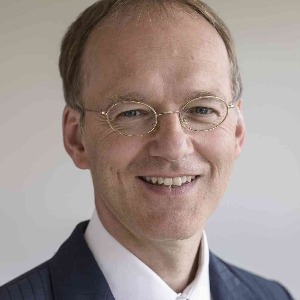
Alexander Unzicker
Pestalozzi Gymnasium Munchen, Germany
Paulo Cesar De Morais
University of Brasilia, Brazil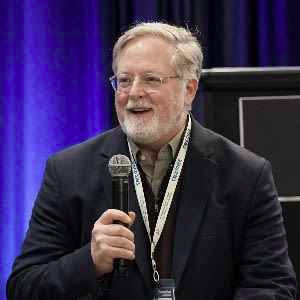
Thomas J Webster
Brown University, United States
Jon H Brasher
Stelleo Scientific Foundation, United States
Tom Lawrence
Ronin Institute of Independent Scholarship 2.0, United Kingdom
Wenjie Liu
University of Oxford, United KingdomSubmit your abstract Today


Title : Photoaligned azodye nanolayers: New trends for liquid crystal devices
Vladimir Chigrinov, Hong Kong University of Science and Technology, Hong Kong
Title : Where is modern physics heading? Why constants of nature matter
Alexander Unzicker, Pestalozzi Gymnasium Munchen, Germany
Title : Global photochemical model CHARM-DE of the earth’s atmosphere for altitudes 0-130 km
Alexei Krivolutsky, Central Aerological Observatory (CAO), Russian Federation
Title : Nonlinear plasma wave excitation in cylindrical semiconductor waveguides
Amir Sohail, COMSATS University Islamabad, Pakistan
Title : Characterization of quaternary alloy
Yarub Al Douri, European Academy of Sciences, Belgium
Title : Using physics to eliminate implant infection in over 25000 patients to date
Thomas J Webster, Brown University, United States