
Experimental Physics
Experimental Physics is dedicated to observing, measuring, and testing physical phenomena through carefully designed experiments. It provides the empirical evidence needed to validate or challenge theoretical predictions. Experimental physicists work with sophisticated instruments such as particle accelerators, telescopes, spectrometers, and detectors to study matter, energy, and fundamental forces. This field spans diverse areas including atomic physics, condensed matter physics, nuclear physics, and particle physics. Precision, accuracy, and reproducibility are essential, as experimental results form the backbone of scientific progress. Advances in experimental physics have enabled breakthroughs such as the discovery of subatomic particles, superconductivity, and gravitational waves. The field also drives technological innovation by improving measurement techniques and instrumentation. By bridging theory and real-world observation, experimental physics ensures that scientific knowledge remains grounded in measurable reality and continues to evolve through evidence-based discovery.

Ephraim Suhir
Portland State University, United States
Alexander Unzicker
Pestalozzi Gymnasium Munchen, Germany
Paulo Cesar De Morais
University of Brasilia, Brazil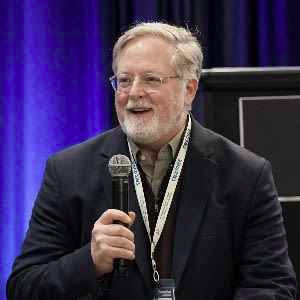
Thomas J Webster
Brown University, United States
Jon H Brasher
Stelleo Scientific Foundation, United States
Tom Lawrence
Ronin Institute of Independent Scholarship 2.0, United Kingdom
Wenjie Liu
University of Oxford, United KingdomSubmit your abstract Today


Title : Photoaligned azodye nanolayers: New trends for liquid crystal devices
Vladimir Chigrinov, Hong Kong University of Science and Technology, Hong Kong
Title : Where is modern physics heading? Why constants of nature matter
Alexander Unzicker, Pestalozzi Gymnasium Munchen, Germany
Title : Global photochemical model CHARM-DE of the earth’s atmosphere for altitudes 0-130 km
Alexei Krivolutsky, Central Aerological Observatory (CAO), Russian Federation
Title : Nonlinear plasma wave excitation in cylindrical semiconductor waveguides
Amir Sohail, COMSATS University Islamabad, Pakistan
Title : Characterization of quaternary alloy
Yarub Al Douri, European Academy of Sciences, Belgium
Title : Using physics to eliminate implant infection in over 25000 patients to date
Thomas J Webster, Brown University, United States