
High-Temperature Superconductors
High-Temperature Superconductors are materials that exhibit superconductivity at temperatures significantly higher than conventional superconductors. Many of these materials are complex copper-oxide or iron-based compounds. Unlike traditional superconductors, their behavior cannot be fully explained by standard theories. High-temperature superconductors show strong electronic correlations and unconventional pairing mechanisms. Their discovery opened new directions in condensed-matter physics. These materials hold promise for practical applications because they reduce the need for extreme cooling. Challenges remain in understanding their microscopic mechanisms and fabricating materials with stable performance. High-temperature superconductors are actively studied for applications in power transmission, magnetic levitation, and advanced electronics. They represent one of the most important unsolved problems in modern physics.

Ephraim Suhir
Portland State University, United States
Alexander Unzicker
Pestalozzi Gymnasium Munchen, Germany
Paulo Cesar De Morais
University of Brasilia, Brazil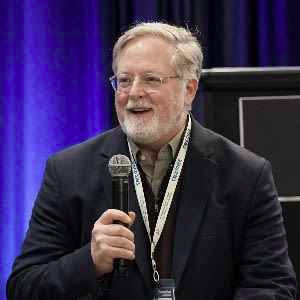
Thomas J Webster
Brown University, United States
Jon H Brasher
Stelleo Scientific Foundation, United States
Tom Lawrence
Ronin Institute of Independent Scholarship 2.0, United Kingdom
Wenjie Liu
University of Oxford, United KingdomSubmit your abstract Today


Title : Photoaligned azodye nanolayers: New trends for liquid crystal devices
Vladimir Chigrinov, Hong Kong University of Science and Technology, Hong Kong
Title : Where is modern physics heading? Why constants of nature matter
Alexander Unzicker, Pestalozzi Gymnasium Munchen, Germany
Title : Global photochemical model CHARM-DE of the earth’s atmosphere for altitudes 0-130 km
Alexei Krivolutsky, Central Aerological Observatory (CAO), Russian Federation
Title : Nonlinear plasma wave excitation in cylindrical semiconductor waveguides
Amir Sohail, COMSATS University Islamabad, Pakistan
Title : Characterization of quaternary alloy
Yarub Al Douri, European Academy of Sciences, Belgium
Title : Using physics to eliminate implant infection in over 25000 patients to date
Thomas J Webster, Brown University, United States