
Non-Perturbative QCD
Non-Perturbative Quantum Chromodynamics deals with the strong interaction in regimes where perturbation theory fails. At low energies, the strong force becomes highly nonlinear, leading to confinement and hadron formation. Non-perturbative QCD studies phenomena such as quark confinement, chiral symmetry breaking, and hadron spectroscopy. Methods include lattice QCD, effective field theories, and phenomenological models. Understanding non-perturbative QCD is crucial for explaining nuclear matter and the structure of hadrons. It also plays a role in studying extreme states such as quark–gluon plasma. Non-perturbative QCD remains one of the most challenging areas in theoretical physics and is essential for a complete understanding of strong interactions.

Ephraim Suhir
Portland State University, United States
Alexander Unzicker
Pestalozzi Gymnasium Munchen, Germany
Paulo Cesar De Morais
University of Brasilia, Brazil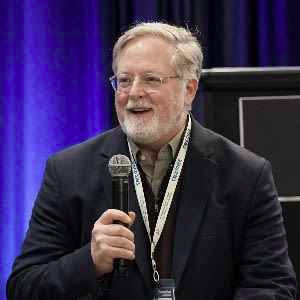
Thomas J Webster
Brown University, United States
Jon H Brasher
Stelleo Scientific Foundation, United States
Tom Lawrence
Ronin Institute of Independent Scholarship 2.0, United Kingdom
Wenjie Liu
University of Oxford, United KingdomSubmit your abstract Today


Title : Photoaligned azodye nanolayers: New trends for liquid crystal devices
Vladimir Chigrinov, Hong Kong University of Science and Technology, Hong Kong
Title : Where is modern physics heading? Why constants of nature matter
Alexander Unzicker, Pestalozzi Gymnasium Munchen, Germany
Title : Global photochemical model CHARM-DE of the earth’s atmosphere for altitudes 0-130 km
Alexei Krivolutsky, Central Aerological Observatory (CAO), Russian Federation
Title : Nonlinear plasma wave excitation in cylindrical semiconductor waveguides
Amir Sohail, COMSATS University Islamabad, Pakistan
Title : Characterization of quaternary alloy
Yarub Al Douri, European Academy of Sciences, Belgium
Title : Using physics to eliminate implant infection in over 25000 patients to date
Thomas J Webster, Brown University, United States