Virtual Event: Attend virtually from anywhere.

Quantum Vacuum
Quantum Vacuum
The Quantum Vacuum is not empty space but the lowest-energy state of a quantum field. It is filled with fluctuating fields and virtual particles that continuously appear and disappear. These vacuum fluctuations have measurable physical consequences, such as the Casimir effect and spontaneous emission. The quantum vacuum plays a fundamental role in quantum field theory and cosmology. It influences particle interactions, energy levels, and the structure of spacetime. In modern physics, vacuum properties are linked to dark energy and fundamental constants. Studying the quantum vacuum reveals how seemingly empty space contributes actively to physical processes and underpins the behavior of the universe.
Committee Members

Ephraim Suhir
Portland State University, United States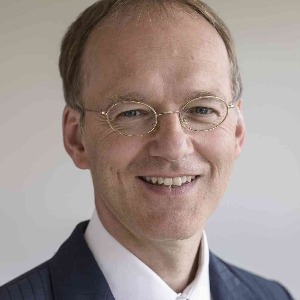
Alexander Unzicker
Pestalozzi Gymnasium Munchen, Germany
Paulo Cesar De Morais
University of Brasilia, Brazil GPIC 2026 Speakers
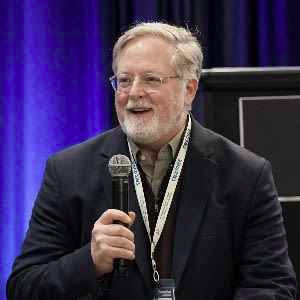
Thomas J Webster
Brown University, United States
Jon H Brasher
Stelleo Scientific Foundation, United States
Tom Lawrence
Ronin Institute of Independent Scholarship 2.0, United Kingdom
Wenjie Liu
University of Oxford, United KingdomSubmit your abstract Today


Title : Photoaligned azodye nanolayers: New trends for liquid crystal devices
Vladimir Chigrinov, Hong Kong University of Science and Technology, Hong Kong
Title : Where is modern physics heading? Why constants of nature matter
Alexander Unzicker, Pestalozzi Gymnasium Munchen, Germany
Title : Global photochemical model CHARM-DE of the earth’s atmosphere for altitudes 0-130 km
Alexei Krivolutsky, Central Aerological Observatory (CAO), Russian Federation
Title : Nonlinear plasma wave excitation in cylindrical semiconductor waveguides
Amir Sohail, COMSATS University Islamabad, Pakistan
Title : Characterization of quaternary alloy
Yarub Al Douri, European Academy of Sciences, Belgium
Title : Using physics to eliminate implant infection in over 25000 patients to date
Thomas J Webster, Brown University, United States